David J. Temple
The Great Library: a shared Story of Value for the century of artificial intelligence
Humanity now holds powers no earlier generation could have imagined: the power to end its own story, and the power to build minds that may soon exceed our own. Whether those powers serve life depends on a question older than any technology. What is truly valuable, and why?
We bring this question to Abu Dhabi because it already holds heritage and the future together. The Emirates preserve their culture and the wisdom of those who came before with great care, while building for the age of artificial intelligence. On Saadiyat Island, the Abrahamic Family House gives three faiths one home, and the Louvre Abu Dhabi welcomes the world’s cultures. A New Renaissance will need a home, and Abu Dhabi already has much of what that home requires.
“Without a shared understanding of who we are, the human race risks fully relinquishing to AI the foundational tasks of defining our value and thereby justifying our existence.”
The task of the century
In Genesis, his final book, Henry Kissinger and his co-authors conclude that a world without artificial general intelligence would be preferable to a world in which even one such system remains unaligned with human values. They then name the difficulty:
“To be sure, how to achieve consensus on what those human values are … is the philosophical, diplomatic, and legal task of the century.”
The new Story of Value we call Cosmocentric Humanism is our response to that task. It is not another list of values, but a deeper account of what value itself is: not a human invention, but an intrinsic quality of reality, recognized across the world’s great traditions and sciences, and wide enough to hold the diversity of humankind. It does not ask any people to set aside its heritage. It preserves the ancient wisdom of the traditions and carries it forward into a new age. The Great Library gives it lasting form.
The collapse of value
Four movements in the story of value
The crisis of value did not begin with artificial intelligence; AI only makes it impossible to postpone. To answer Kissinger’s question, we must first understand how the modern world lost its footing.
Premodern: value is real, but each tradition claims to own it.
In premodernity, the great traditions knew that value is real. But each believed it held the one true transmission, and too often that conviction became a reason to conquer or convert.
Modern: value is declared “self-evident”.
Modernity kept the dignities of value (life, liberty, human rights) while ceasing to explain their source. It took a hidden social loan from the traditions it set aside, and wrote a promissory note: if value is eternal, why does its meaning keep changing?
Postmodern: value is dismissed as made up.
Postmodernity called in the loan, and no one could pay. Value was recast as a human construction and meaning as private preference. In 2016, Oxford Dictionaries named “post-truth” its word of the year.
The next step: value is real, eternal and evolving.
Cosmocentric Humanism answers both debts at once. Value is intrinsic to reality itself, not invented by us, and its expressions deepen through history. As First Principles and First Values puts it: “Eternal values evolve.”
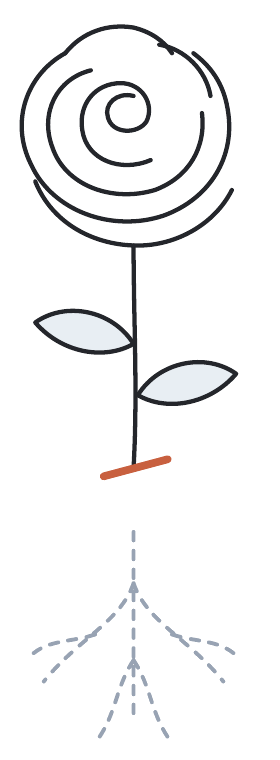
A rose cut from its roots is still beautiful for a day or two. Then it withers. A civilization can go on speaking of dignity, justice and love for a generation after severing them from their ground. Then the words lose their life.
Without a real field of value, nothing can be finally wrong. Even Bertrand Russell, the twentieth century’s great skeptic, confessed that he could not believe “that all that is wrong with wanton cruelty is that I don’t like it.”
Why this is now urgent: artificial intelligence has no value of its own. AI may soon exceed human capacity in domain after domain, yet it carries no inherent sense of what matters. A system that does not recognize human value need not intend harm: the builders of a tower do not hate the ants beneath it.
Every agreement on AI, between nations and between the companies that build it, depends on trust. And trust depends on something deeper. There is no trust without a shared field of value.
The Great Library
Weaving humanity’s wisdom into one story
The great civilizations of the past rose and fell. Today there is one global civilization, and if it unravels, it will be a failure of an entirely different order: a global failure, one that may very well be an extinction event. The Great Library is a growing body of books and oral essays that articulates First Principles and First Values for this planetary civilization. It is a House of Wisdom for our time: like the House of Wisdom in Baghdad, its first task is to preserve wisdom and hand it on. Its foundational works set out the philosophy; its impact books carry it into education, law, economics, technology and governance.
Its method: to read the deepest texts of the great traditions alongside the deepest science, and to show that the values they share run all the way up and all the way down the evolutionary chain.
Traditions: Islam, Judaism, Christianity, Hinduism and Buddhism, Taoism, Indigenous wisdom.
Sciences: Physics, Cosmology, Chemistry, Biology, Evolution, Mathematics.
Together: First Principles and First Values, one universal grammar of value.
Where the library works. Every civilization stands on three interdependent layers: its material infrastructure; its social structure of law, institutions and economy; and its superstructure, the worldviews, stories, principles and values that animate the whole. In the Center’s view, superstructure is the root cause of a society’s formation, and it is where the Great Library works. As First Principles and First Values puts it: “To evolve the story is to evolve the source code that works through all three layers.”
The cornerstone volume: First Principles and First Values. Forty-two propositions on the meta-crisis and the world to come (2024), by David J. Temple.
“It is not that human beings contrive value; rather, value precedes life.”
“The position argued for in this book is of vital importance … it needs urgently to be read.”
Value is a quality, not a quantity. We have exiled value to the price of a stock or a commodity, to what can be measured. Yet the deepest value is immeasurable: we live inside value, even as value lives inside us.
Selected works by David J. Temple
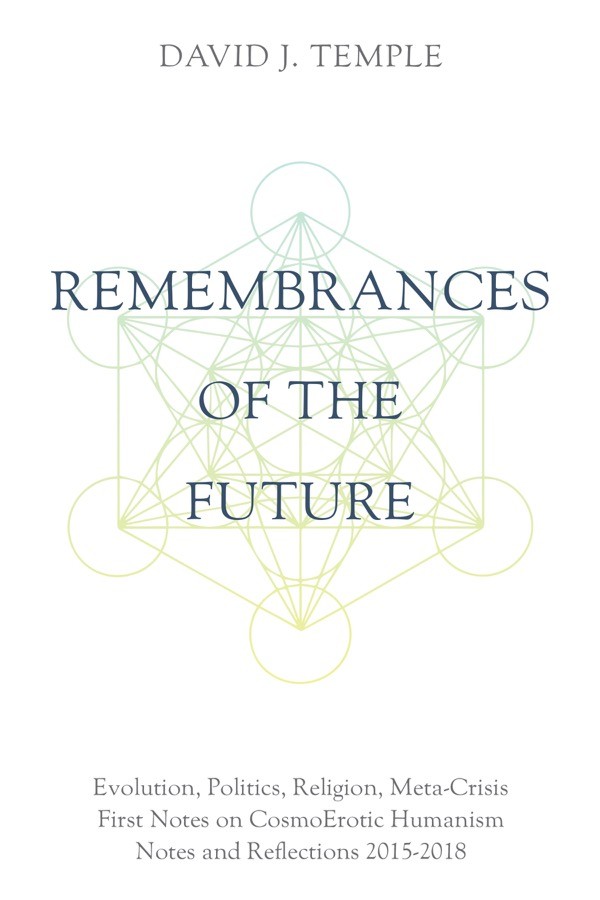
Remembrances of the Future
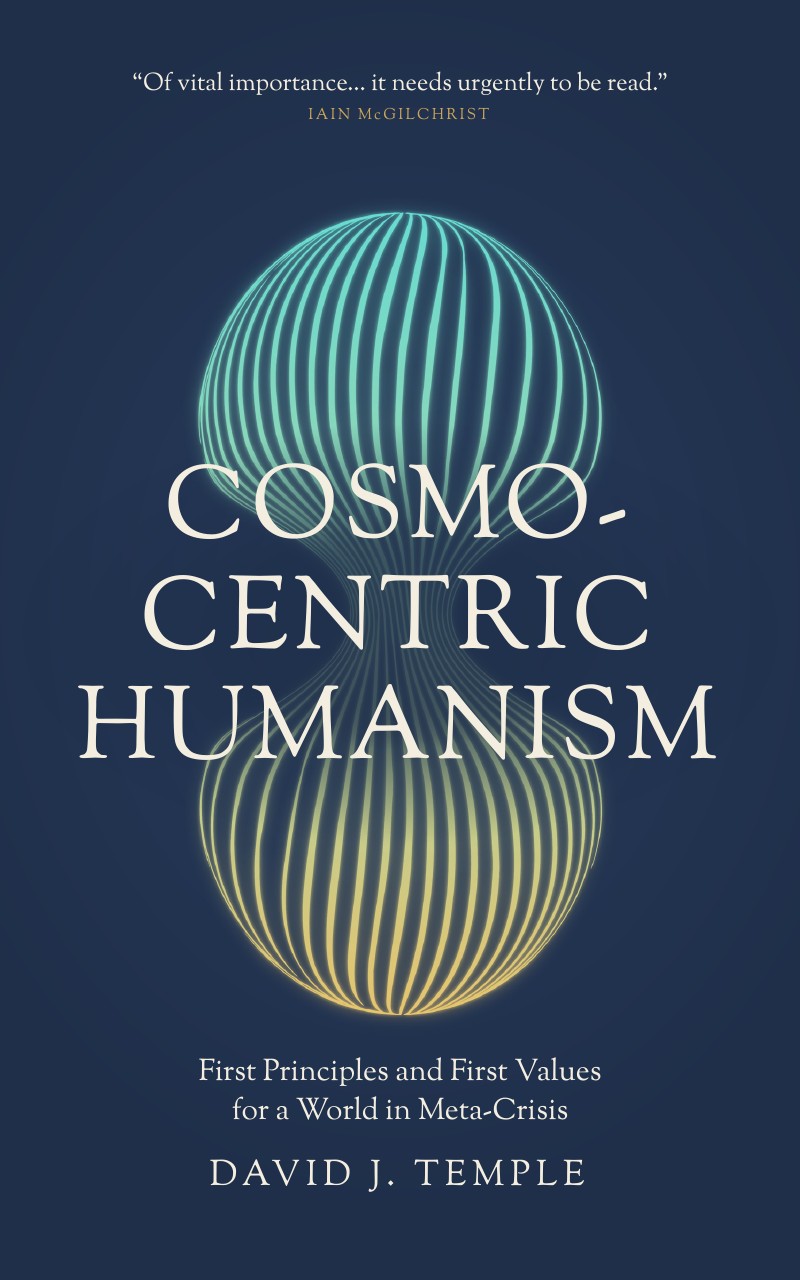
Cosmocentric Humanism
An invitation to Abu Dhabi
Great stories have a home
After the Black Death, Leonardo da Vinci and his contemporaries understood that they lived in a time between worlds and a time between stories, and that the most powerful act available to them was to tell a new story. The Renaissance followed. Our moment is similar, with far higher stakes. It calls for a New Renaissance, in which ancient wisdom, preserved and renewed, becomes the ground of a new civilization.
Baghdad
The Abbasid House of Wisdom, where in the eighth and ninth centuries the learning of many peoples was gathered, translated and carried forward.
Florence
Where a new story, told after catastrophe, became the Renaissance.
Abu Dhabi
Could the New Renaissance, and a new Story of Value for the age of AI, find its home here?
Abu Dhabi already hosts the dialogue of traditions: the Document on Human Fraternity was signed here in 2019, and the Abrahamic Family House stands on Saadiyat Island. The House’s conversations on dignity, which rises from our relations and duties to one another, and on grace as social harmony, already speak the language a shared Story of Value needs. Abu Dhabi’s National Library and Arabic Language Centre treat knowledge as a living inheritance. Preserving heritage and sharing it with the world is already the work of Abu Dhabi’s cultural institutions. A shared Story of Value, honoring every tradition while belonging to none alone, would be a natural next chapter. Abu Dhabi could become the home of the New Renaissance and the capital of the new Story of Value: the place where it is convened and preserved, and a destination for all who come to learn it. It is work for a big imagination: a story large enough to hold every tradition, and clear enough to guide the minds we are now building.
An exploratory conversation
History turns on conversations. We would welcome an exploratory meeting or dinner, at a time of your choosing, to introduce the Great Library, to hear the questions that matter most to you, and to consider together whether there is a meaningful basis for what might follow.